Back Anatomy

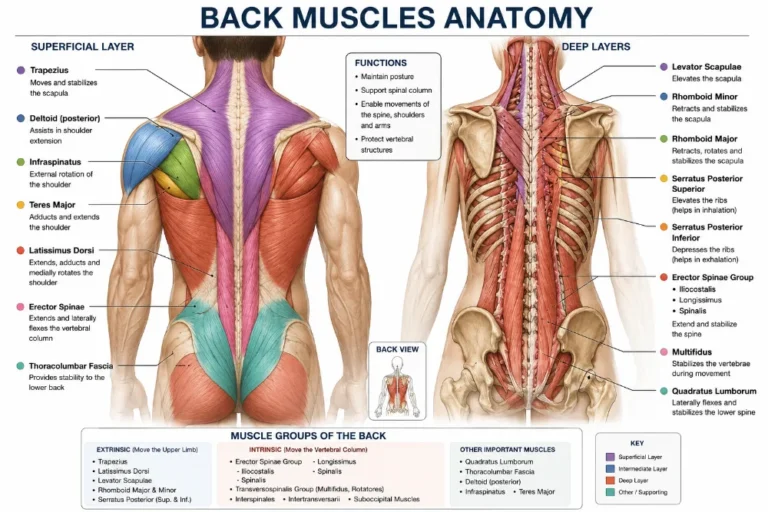
Back Anatomy is the study of the structures that form the posterior (back) region of the body, providing support, stability, and movement while protecting the spinal cord. It includes the vertebral column, spinal cord, back muscles, ligaments, intervertebral discs, nerves, blood vessels, and connective tissues. These structures work together to maintain posture, enable movements such as bending and twisting, transmit nerve signals, and support the body’s weight. Understanding back anatomy is essential for diagnosing and managing conditions such as back pain, spinal injuries, disc disorders, postural abnormalities, and nerve compression. It is a fundamental subject for medical, physiotherapy, nursing, chiropractic, and other health science students, forming the basis for effective assessment, treatment, and rehabilitation.