Head Anatomy is the study of the structures that make up the head, including the skull, brain, face, eyes, ears, nose, mouth, muscles, nerves, blood vessels, and sensory organs. These structures work together to protect the brain, support facial expressions, enable communication, and control essential functions such as vision, hearing, smell, taste, and balance. Understanding head anatomy is essential for healthcare professionals to diagnose and manage conditions affecting the head, face, and nervous system. It provides a strong foundation for the study of medicine, physiotherapy, dentistry, nursing, and other health sciences, as well as for understanding injuries, neurological disorders, and craniofacial conditions.
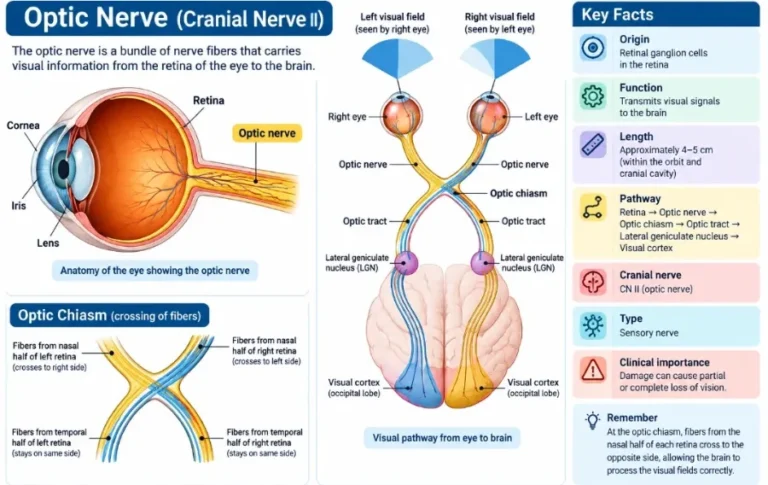
Introduction The optic nerve is a vital nerve that connects the eye to the brain and carries visual information from the retina to the brain for processing. The back of…