Gluteus Maximus Muscle
Introduction
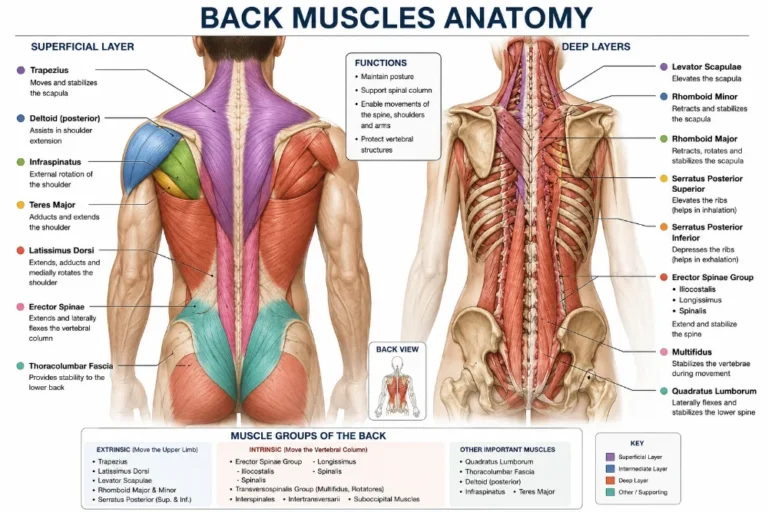
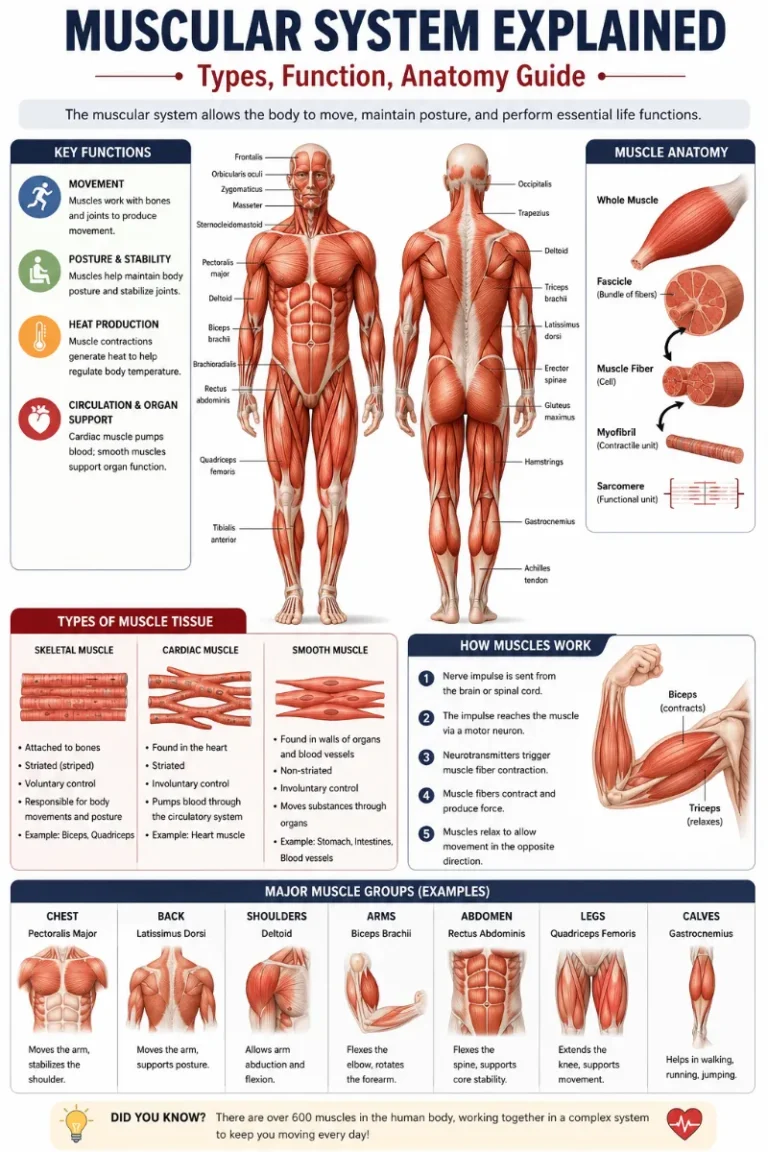
In humans, the gluteus maximus is the primary hip extensor muscle. It is the largest and most superficial of the three gluteal muscles, and it contributes significantly to the shape and appearance of the hips and buttocks. It is the biggest muscle. Its quadrilateral, dense, fleshy mass gives the buttocks their prominence.
Given its ability to keep the trunk in an upright position, its size is one of the most distinctive features of the human muscular system.
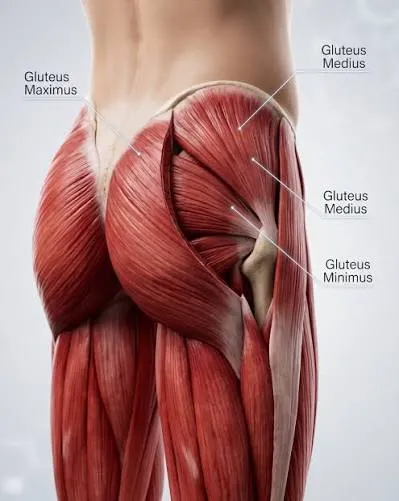
The gluteus maximus is the most superficial gluteal muscle and contributes to the prominence of the gluteal region. It is part of the group of muscles around the hip, which also includes the gluteus medius, gluteus minimus, and tensor fasciae latae. The gluteus maximus extends from the pelvis and sacrum to the femur’s gluteal tuberosity, with some of its fibers also attaching to the iliotibial tract. It is innervated by the inferior gluteal nerve, which arises from the L5–S2 spinal nerve roots.
The primary actions of the gluteus maximus are extension and external rotation of the thigh at the hip joint. In addition, its inferior fibers assist with thigh adduction, while its superior fibers help with thigh abduction.
Structure
The outermost muscle of the buttocks is called the gluteus maximus.
It originates from several structures in this region, including the sacrotuberous ligament, the aponeurosis of the erector spinae (thoracolumbar fascia), the fascia covering the gluteus medius (gluteal aponeurosis), the lower part of the sacrum, and the side of the coccyx (tailbone). It also originates from the posterior gluteal line of the outer surface of the ilium, a pelvic bone, and the area above and below this line, extending to the iliac crest.
The muscle fibers run obliquely downward and laterally.
The gluteus maximus has two main areas of insertion:
- The superficial fibers of the lower part of the muscle, along with those forming the larger upper portion, end in a thick tendinous layer. This layer passes over the greater trochanter and blends with the iliotibial tract of the fascia lata.
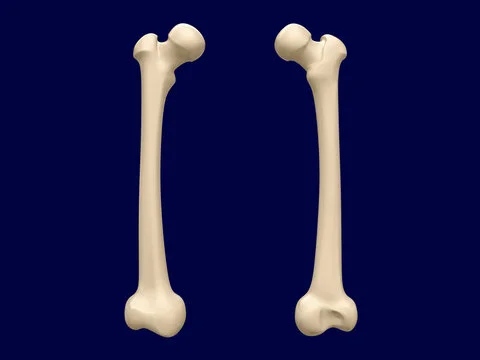
- The deeper fibers of the lower part of the muscle attach to the gluteal tuberosity of the femur and extend toward the linea aspera, between the vastus lateralis and adductor magnus.
Origin
The gluteus maximus muscle originates from the gluteal surface of the ilium behind the posterior gluteal line, the sacrotuberous ligament, the posterolateral part of the sacrum and coccyx, the thoracolumbar fascia, and the gluteal aponeurosis. Its muscle fibers run inferolaterally and converge toward their attachment points near the femur.
Insertion
The upper three-quarters of the muscle form a tendinous layer that blends with the iliotibial tract between the two layers of the fascia lata. The deeper lower quarter of the muscle attaches to the gluteal tuberosity of the femur through a thick aponeurosis.
Nerve Supply
The gluteus maximus receives its nerve supply from the inferior gluteal nerve, which arises from the L5–S2 spinal nerve roots.
Blood Supply
The gluteus maximus receives its blood supply mainly from muscular branches of the superior and inferior gluteal arteries, which arise from the internal iliac artery.
Function
When the leg is flexed at the hip, the gluteus maximus extends it to bring it into a straight line with the body. When the hip is bent, the gluteus maximus helps straighten it by extending the thigh. Additionally, when the hip is flexed, the gluteus maximus can help tilt the pelvis backward and straighten the trunk.
When the femur is fixed, the gluteus maximus helps stabilize the pelvis and support the trunk above the hip joint. This action is especially noticeable when standing on one leg. The biceps femoris (long head), semitendinosus, semimembranosus, and adductor magnus also help extend the hip and bring the pelvis backward. This movement allows the body to return to an upright position after stooping.
Additionally, the lower portion of the muscle serves as an external rotator and can assist with adduction of the thigh. The upper fibers help with hip abduction.
When standing, the gluteus maximus and the tensor fasciae latae help stabilize the hip and knee through their connection to the iliotibial tract. This tract helps stabilize the femur on the tibia and supports the knee during weight-bearing activities. However, the gluteus maximus does not directly perform knee extension or valgus movement; its main role is hip extension and external rotation, with some fibers assisting in hip abduction and adduction.
Bursae
The gluteus maximus is the biggest and outermost muscle of the three muscles in the gluteal region. A thin layer of fascia covers it, separating the muscle from the surrounding subcutaneous tissue.
The deep surface of the gluteus maximus is related to several structures, including the pelvic bones, the proximal attachments of the hamstring muscles, the gluteus medius, and several deep hip rotators, such as the piriformis, superior gemellus, inferior gemellus, and obturator internus muscles.
Three bursae are also associated with the deep surface of the gluteus maximus:
- Trochanteric bursa: This bursa lies between the greater trochanter of the femur and the gluteus maximus, helping reduce friction during movement.
- Ischiogluteal bursa: This bursa is located between the ischial tuberosity and the gluteus maximus, where it helps reduce pressure and friction during sitting.
- Gluteofemoral bursa: This bursa lies between the gluteus maximus and the vastus lateralis muscle or its associated structures, helping reduce friction between these tissues.
How Do You Activate Your Gluteus Maximus?
To get the most out of gluteus maximus workouts, it can help to warm up and activate your gluteal muscles, especially if you spend a lot of time sitting, whether or not you experience symptoms sometimes referred to as “dead butt syndrome.” Because the gluteus maximus is such a large muscle, it responds well to a variety of exercises that work it from different angles.
To get your glutes moving, try a few squats, lunge variations, or hip thrusts before adding weights to your glute workout routine.
The Advantages of Gluteus Maximus Workouts
Stronger glutes can benefit almost everyone because these muscles play an important role in normal, healthy movement. The American Sports and Fitness Association highlights several potential benefits:
- Less knee and hip discomfort: Improving glute strength may help support the lower-body joints and improve movement control.
- Reduced lower back discomfort: Strengthening the gluteus maximus can improve hip function and help reduce excessive strain on the lower back in some people.
- Lower risk of exercise-related injuries: Stronger gluteal muscles can help improve movement control and stability during physical activity.
- Better athletic performance: Strong glutes provide power for running, jumping, and cycling, helping you perform these activities more effectively.
- Improved balance and stability: Strong gluteal muscles help stabilize the pelvis and support better balance during physical activities, potentially reducing the risk of falls.
- Better posture: Improving lower-body strength and hip control may help support posture and movement, particularly when combined with appropriate exercises for the rest of the body.
- Easier daily activities: Strong glutes help you get out of bed, rise from a chair, and climb stairs more comfortably. Maintaining glute strength can also support mobility and independence as you age.
Gluteus Maximus Exercises
The Split Squat
This glute exercise can be made more challenging by holding a barbell across your upper back, a dumbbell in each hand, or a kettlebell at your chest.
- Start in an upright position with your feet about hip-width apart and your arms relaxed at your sides.
- Step your left foot back two to three feet and balance on the toes of your left foot.
- As you lower into a split squat, bend both knees to approximately a 90-degree angle. Keep your right knee aligned with your right toes.
- To stand back up, press through your right foot and squeeze your glutes as you return to the starting position.
- Repeat until you reach your target number of repetitions.
- Continue on the opposite side.
Step-Up
To make the exercise more challenging, improve the balance demand by holding a kettlebell in one hand or a dumbbell in each hand.
- Position yourself in front of a box, staircase, or sturdy step.
- Squeeze your glutes, press through your right foot, and place it firmly on the step to raise your body. Bring your left foot up onto the step.
- Lower your right foot to the floor first, then bring your left foot down.
- Start with your left foot this time and repeat the movement.
- Keep switching between sides until you complete your planned number of repetitions.
Lunges
Although they look similar, split squats are stationary exercises, while lunges involve stepping forward or backward. To make lunges a little easier, step backward rather than forward with each repetition. You can make them more challenging by holding dumbbells, a kettlebell, or a barbell.
- Begin by standing with your feet hip-width apart and your hands on your hips or by your sides.
- Step your right foot forward two to three feet and bend both knees to approximately a 90-degree angle as you lower into a lunge position.
- Return to standing by pressing through your right foot and squeezing your glutes.
- Step forward with your left foot and perform the same movement.
- Keep alternating legs until you complete your target number of repetitions.
Romanian Deadlift
Single-leg Romanian deadlifts for a greater gluteus maximus challenge once you have learned to perform the standard version with proper form. First, make sure you can perform the basic movement with proper form.
- Stand upright with a dumbbell in each hand, holding the weights in front of your thighs with your palms facing your legs. Keep your chest lifted and engage your glutes and abdominal muscles.
- Push your hips backward to hinge at the hips, keeping your knees slightly bent.
- Lower the weights along the front of your legs toward your ankles until they reach approximately the middle of your shins, or as far as your flexibility allows without rounding your back. Pause briefly at the bottom.
- To return to standing, exhale, squeeze your glutes, and push through your feet. Focus on using your glutes and hamstrings to drive the movement rather than relying on your lower back.
- Pause briefly at the top while keeping your glutes engaged.
- Repeat for your desired number of repetitions.
When Is the Right Time to Stretch Your Glutes?
Before working out, you can perform glute stretches after a gentle warm-up. This can improve circulation to the muscles and help get them ready for physical activity.
Stretching your glutes after a workout can also be beneficial. Regular stretching may help improve flexibility, maintain your range of motion, and reduce the feeling of tightness after exercise.
You can also stretch your glutes when they become tight from sitting for extended periods, such as spending hours at your workplace or watching several episodes of your favorite show.
What Are the Advantages of Gluteal Stretches?
Stretching can help relieve tightness in your glutes and may ease several types of discomfort, including:
- Lower back discomfort
- Pain or discomfort in the buttocks
- Pelvic discomfort
- Stiffness around the hips
- Tight hamstrings
- Knee discomfort in some cases
Additionally, glute stretches may help you:
- Improve flexibility
- Increase your range of motion
- Reduce the risk of certain movement-related injuries
- Improve overall mobility
- Move more comfortably during daily activities
Gluteus Stretching Exercises
Figure-Four Stretch
- Settle comfortably on the floor to begin.
- Cross your right ankle over your left thigh, just above the knee. Gently apply pressure to your right knee until you feel a stretch in your right glute.
- Hold the position for 30 seconds.
- Repeat on the opposite side.
Another version of this popular glute stretch involves lying on your back and clasping your hands behind your left thigh. Gently draw your left leg toward your upper body while keeping your right ankle crossed over your left thigh.
Standing Glute Stretch
- Stand with your feet hip-width apart.
- Cross your right leg over your left leg.
- Slowly lean forward from your hips, reaching toward your ankles or the floor only as far as feels comfortable, without pushing beyond your natural range of motion.
- Hold the position for 30 seconds.
- Repeat on the opposite side.
Pigeon Pose
Pigeon Pose is well known as a hip-opening yoga posture that stretches the gluteal muscles. Move slowly and steadily, breathe evenly, and only go as far as feels safe and comfortable.
- Begin in a plank position on your mat.
- Move your right knee toward your right hand while stretching your left leg straight back behind your body.
- Keep your right heel closer to your torso to reduce the intensity of the stretch. For a deeper stretch, position your right shin more diagonally across the front of your mat, as your flexibility allows.
- Remain upright or gently lean your upper body forward over your right leg. You should feel the stretch around your right glute and hip.
- Hold the position for 30 seconds.
- Repeat on the opposite side.
FAQs
What Are the Two Major Functions of the Gluteus Maximus?
The gluteus maximus helps control hip movement and stability. Its stabilizing action helps support the pelvis and maintain proper alignment of the hip joint.
The gluteus maximus is vital for extending and externally rotating the hip during movements such as running at speed and climbing stairs.
Where Are Your Glutes?
The muscles that make up the buttock area are called the glutes.
The gluteal muscle group consists of three muscles: the gluteus maximus, gluteus medius, and gluteus minimus. These muscles are essential for maintaining hip stability and supporting lower-body movement and mobility.
What Are the 3 Gluteal Muscles?
There are three gluteal muscles. Of the three gluteal muscles, the gluteus minimus is the smallest and deepest, while the gluteus medius sits above it and beneath the gluteus maximus. The gluteus maximus, one of the largest muscles in the human body, is the most superficial gluteal muscle.
How Do You Stretch the Gluteus Maximus?
Lie on your back with both knees bent and your feet flat on the floor. Place the ankle of the affected leg on the thigh of the opposite leg, just above the knee. Using your hand, gently guide the affected knee away from your body until you feel a stretch in the buttock muscles. Hold the stretch for 15 to 30 seconds.
References
- Wikipedia contributors. (2025, January 11). Gluteus maximus.Wikipedia.https://en.wikipedia.org/wiki/Gluteus_maximus
- Gluteus maximus muscle. (2023, November 3). Kenhub.https://www.kenhub.com/en/library/anatomy/gluteus-maximus-muscle
- Dr. Bhavna Valand. (2022). Gluteus maximus muscle: Anatomy, Origin, Insertion, Function, Exercises. SAMARPAN PHYSIOTHERAPY CLINIC AHMEDABAD. https://samarpanphysioclinic.com/gluteus-maximus-muscle/
- Klein, S. (1970, January 1). 7 Moves to Train Your Gluteus Maximus, aka the Largest Muscle In Your Body. https://www.onepeloton.com/blog/gluteus-maximus-exercises/
- Nunez, K. (2023, February 10). 7 easy ways to stretch tight glutes.Healthline. https://www.healthline.com/health/exercise-fitness/how-to-stretch-glutes#stretches-to-try
- Ross, M. (1970, January 1). Give Your Glutes Some Relief with These 6 Stretches. https://www.onepeloton.com/blog/glute-stretches/