Adductor Longus Muscle – Anatomy, Origin, Insertion, Function & Clinical Relevance
Introduction
The adductor longus is one of the major muscles found within the inner thigh. It is a triangular-shaped muscle that is part of the hip adductor group. The muscle plays an important role in bringing the thigh towards the centre of the body.
The adductor longus muscle is found within the medial compartment of the thigh. It lies between the other adductor muscles. The muscle not only helps with hip movement but also contributes to pelvic stability during activities such as walking, running and standing.
Anatomy
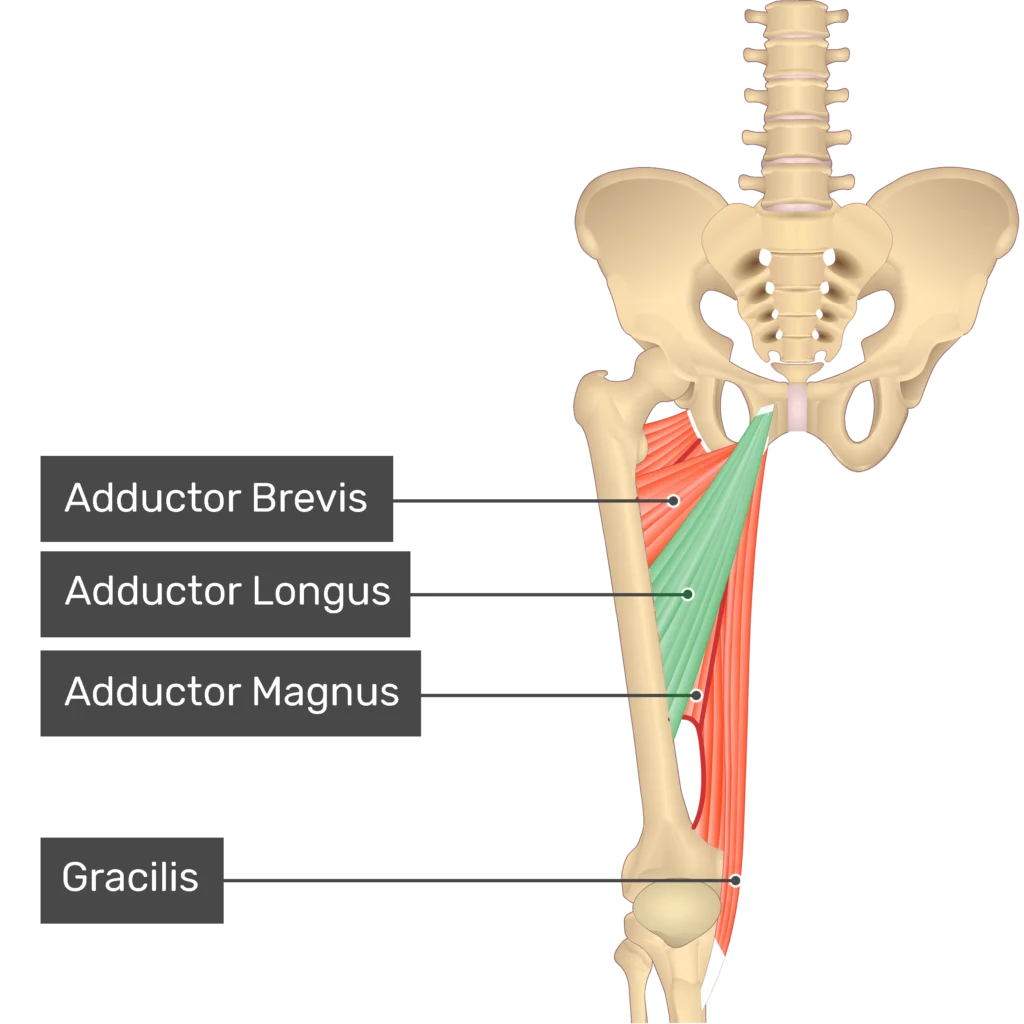
The adductor longus is a superficial muscle located within the medial aspect of the thigh. It originates from the pubic bone, just lateral to the pubic symphysis and below the pubic crest. Its fibres run inferiorly and laterally, forming a broad muscular belly.
It is found anterior to the adductor brevis and adductor magnus. The adductor brevis muscle sits between the adductor longus and adductor magnus within the deeper aspect of the thigh.
As the muscle approaches the femur, its fibres become more tendinous and form an aponeurosis that attaches to the linea aspera on the posterior aspect of the femur. The upper part of the muscle also contributes to the posterior wall of the proximal adductor canal.
Relationships
The adductor longus has several important relationships with the surrounding muscles, nerves and blood vessels.
It lies anterior to the adductor brevis and adductor magnus. Deep to the muscle are the anterior division of the obturator nerve and branches of the profunda femoris vessels. Medially, the gracilis muscle can be found, while the pectineus lies near its upper lateral border.
The fascia lata covers the superficial aspect of the muscle. In males, the spermatic cord is related to its upper anterior region. The femoral artery and vein lie anterior to the lower part of the muscle.
Knowing these relationships helps with understanding the anatomy of the groin and medial thigh.
Origin
The adductor longus originates from the anterior surface of the body of the pubis, just lateral to the pubic symphysis and below the pubic crest.
Insertion
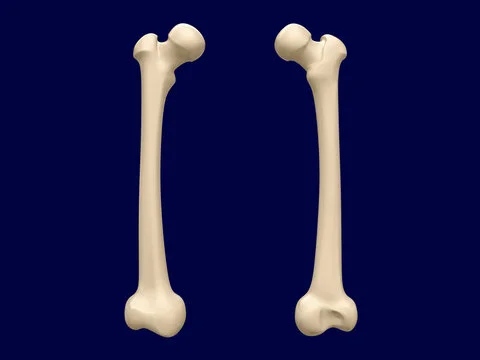
The muscle inserts onto the middle third of the medial lip of the linea aspera. The linea aspera is a prominent bony ridge found on the posterior aspect of the femur.
The insertion is below that of the adductor brevis and lies between the insertion of the adductor magnus and the origin of the vastus medialis.
Function
The primary function of the adductor longus is to adduct the thigh towards the midline of the body.
It can also assist with hip flexion and, depending on the position of the hip, external rotation.
The muscle is active during many daily activities. It helps control the position of the thigh during walking and supports the leg during standing. Along with the other hip adductors, it also contributes to pelvic control.
This muscle is particularly important during sports involving running, kicking and sudden changes in direction.
Blood Supply
The adductor longus muscle receives most of its blood supply from branches of the profunda femoris artery (deep femoral artery).
It also receives blood from the obturator artery and nearby arterial branches. These blood vessels provide the muscle with oxygen and nutrients.
Nerve Supply
The adductor longus muscle receives its nerve supply from the anterior division of the obturator nerve.
This nerve originates from the lumbar plexus and receives nerve fibres from the L2, L3 and L4 spinal nerve roots. It carries signals from the nervous system, allowing the muscle to contract and perform hip adduction.
Clinical Relevance
Femoral Triangle
The adductor longus muscle has an important relationship with the femoral triangle. This is a small triangular region found in the upper anterior aspect of the thigh.
The adductor longus forms the medial border of this region. The sartorius forms the lateral border, while the inguinal ligament forms the superior border.
Three major structures pass through this region: the femoral nerve, femoral artery and femoral vein. They are arranged from lateral to medial in the order of nerve, artery and vein.
This area is clinically important as it is used as an anatomical landmark by healthcare professionals to palpate the femoral pulse.
Adductor Longus Injury
The adductor longus muscle is one of the muscles commonly affected by groin injuries. These injuries can occur in athletes due to the high demands placed on the inner thigh muscles during sports. Activities such as football and hockey often involve sudden changes in direction.
An injury can occur if the muscle is stretched beyond its normal limits. It can also happen when the muscle is forced to contract suddenly against resistance. Repeated overloading during training may also lead to an injury.
Patients with an adductor longus injury often experience pain in the groin or inner thigh. The pain usually increases when bringing the legs together, running, kicking, or changing direction. There may also be tenderness around the muscle belly or its attachment near the pubic bone.
Depending on the severity, the injury can range from a mild muscle strain to a more significant tear. A proper assessment is important to determine the extent of the injury.
Assessment & Management
Groin pain caused by an injury to the adductor muscles should not be ignored. Some injuries may cause ongoing discomfort or recurring problems if they are not properly assessed and rehabilitated.
A physiotherapist will generally assess the inner thigh muscles, hip joint, pelvis and core muscles. Muscle strength, flexibility, hip movements and pain during resisted adduction are also checked.
Management will depend on the type and severity of the injury. Initially, the focus is on managing pain and avoiding activities that aggravate the injured muscle.
As patients start to improve, they can gradually begin exercises to rehabilitate the injury. These may include:
- Strengthening exercises for the adductor muscles.
- Mobility exercises to maintain good hip movement.
- Stretching exercises to improve flexibility when appropriate.
- Strengthening exercises for the core muscles.
- Functional exercises, including walking, jogging, running and changes in direction.
The exercises should be progressed according to the patient’s pain levels, muscle strength and ability to perform daily or sporting activities. Stretching should not be forced, especially during the early stages of an acute injury.
For further information regarding related conditions and their physiotherapy management, please see our articles on Groin Strain and Adductor Tendinopathy.
Exercises for the Adductor Longus Muscle
Stretching Exercises
1. Butterfly Stretch
The butterfly stretch is a well-known exercise that targets the groin and inner thigh muscles. To begin, sit upright on the floor with your legs extended in front of you. Bend your knees and bring the soles of your feet together, allowing your knees to drop outwards towards the floor so that your legs form a diamond shape.
During this exercise, you can gently press your elbows against your inner thighs or knees to increase the stretch. Move gradually without forcing your knees down or causing pain. Hold this position for 20 to 30 seconds to help improve flexibility in the inner thigh muscles and hip region.
2. Side Lunges
Side lunges target the inner thigh muscles and provide a dynamic stretch for the hip adductors. Start by standing with your feet wider than shoulder-width apart. Shift your body weight towards one side and bend that knee while keeping the opposite leg straight. This movement stretches the adductor muscles of the straight leg while also working the muscles of the bent leg.
Perform side lunges slowly and with proper control to avoid unnecessary strain on the hip and thigh muscles. Regular practice can help improve hip mobility and the flexibility of the inner thigh muscles.
3. Frog Stretch
The frog stretch is another exercise that targets the inner thigh muscles. Begin by positioning yourself on all fours with your hands and knees resting on the floor. Slowly move your knees outwards while keeping them bent, and your feet turned outwards. Lower your hips towards the floor until you feel a comfortable stretch along the inner thighs.
Keep your hips and knees aligned and avoid forcing your legs too far apart. Maintain a comfortable position without allowing pain to develop. This stretch helps improve flexibility in the hip adductor muscles.
Strengthening Exercises
1. Wide-Stance Squat
The squat is commonly considered one of the most effective exercises for working the lower-body muscles. It involves several muscle groups, including the quadriceps, glutes and hip adductors.
Among the different squat variations, the wide-stance squat, also known as the sumo squat, places particular emphasis on the inner thigh muscles.
You can perform this exercise using body weight or add resistance with equipment such as a barbell, kettlebell, dumbbell or sandbag.
For this exercise, we will focus on the wide-stance squat without using any additional weight.
How to execute:
Stand with your feet wider than shoulder-width apart and turn your toes slightly outwards.
Slowly bend your knees and lower your hips towards the floor while keeping your back straight and your chest lifted. Lower yourself until your thighs are approximately parallel to the floor, or as far as your mobility allows.
Push through your feet to return to the starting position in a controlled manner. You should feel your thigh and gluteal muscles working throughout the movement.
Continue for the required number of repetitions. Aim for 2–3 sets of 10–12 repetitions.
2. Standing Banded Hip Adduction
Resistance bands are useful for strengthening the hip adductor muscles. They allow you to work the inner thighs against resistance while performing controlled leg movements.
The difficulty of this exercise can be adjusted by changing the resistance band or moving closer to or further away from the anchor point.
How to execute:
First, secure one end of a resistance band to a sturdy anchor, such as a power rack or another stable support.
Stand sideways to the anchor point and loop the other end of the band around the ankle of your working leg.
Move away from the anchor until you feel some tension in the band. Keep your body upright and hold a stable support if needed.
Start with your working leg slightly out to the side. Slowly bring it towards the middle of your body, moving it across or towards the opposite leg while contracting your inner thigh muscles.
Return your leg to the starting position slowly, allowing the band to pull it outwards under control.
Complete the required repetitions and then turn around to work the opposite leg. Aim for 2–3 sets of 10–12 repetitions on each side.
3. Side-Lying Hip Adduction
Side-lying hip adduction is a useful exercise for beginners. It does not require any special equipment and directly targets the hip adductor muscles.
How to execute:
Lie on your side on an exercise mat with your hips stacked and your spine in a neutral position. Rest your head on your lower arm and place your upper hand on the floor in front of your body for support.
Bend your upper leg and place that foot flat on the floor in front of your lower leg.
Keep your bottom leg straight and slowly lift it towards the ceiling by contracting your inner thigh muscles. Keep your toes pointing forwards and avoid rotating your hips during the movement.
Lower your leg back towards the floor in a controlled manner without completely relaxing the muscles.
Repeat the movement and then turn onto your opposite side to work the other leg.
Perform 1–2 sets of 10–12 repetitions on each side.
4. Copenhagen Hip Adduction
The Copenhagen hip adduction exercise is a more challenging exercise that targets the hip adductor muscles. It is commonly used by athletes and more experienced individuals to improve inner thigh strength.
This exercise requires considerable strength and control because the adductors work to support part of the body’s weight. Beginners should start with an easier variation before progressing to the full exercise.
How to execute:
Place a weight bench or another stable elevated surface beside you. Lie on your side with your upper body supported on one elbow, similar to a side plank position.
Place your upper leg on the bench, supporting it with the inner side of your knee or thigh. Keep your lower leg underneath the bench.
Lift your hips off the floor to form a side plank position while keeping your upper leg supported on the bench.
Slowly lift your lower leg towards the underside of the bench by contracting the adductor muscles. Keep your body stable and avoid allowing your hips to drop.
Lower your bottom leg back towards the starting position in a controlled manner.
After completing the repetitions, turn onto your opposite side and repeat the exercise to strengthen the adductors of the other leg.
Aim for 2–3 sets of 10–12 repetitions on each side, according to your strength and ability. Start with fewer repetitions or a shorter lever variation if the full exercise is too difficult.
FAQs
What are the adductor longus muscles?
This big, flat muscle is called the adductor longus. It constitutes the medial edge of the femoral triangle and partially covers the adductor brevis and magnus. There is some medial rotation, thanks to the adductor longus. Beneath the adductor longus is a small muscle called the adductor brevis.
What is the function of the adductor longus muscle?
The adductor group’s primary function is to adduct the thigh at the hip joint. Additionally, the adductor longus muscle contributes to the thigh’s flexion and external/lateral rotation.
What exercise works the adductor longus?
Side-Lying Leg Lifts: This exercise is excellent for strengthening the adductor muscles. Place your top leg and foot flat on the floor in front of you while lying on your side. To feel a tug on the inside and outside of your thigh, raise your lower leg upward toward the ceiling.
Is adductor longus a hip flexor?
Additionally, as will be discussed later, this adduction force might push the pelvic pubic symphysis area closer to the femur. According to their anatomical location, the adductors are also regarded as hip flexor muscles.
References:
- Adductor longus muscle. (2023, May 25). Kenhub. https://www.kenhub.com/en/library/anatomy/adductor-longus-muscle
- Bell, D., & Oh, G. (2016). Adductor longus muscle. Radiopaedia.org. https://doi.org/10.53347/rid-44366
- ProHealth Prolotherapy Clinic. (2025, January 25). Stretching Exercises for adductor muscles – ProHealth Prolotherapy Clinic. https://prohealthclinic.co.uk/blog/stretching-exercises-for-adductor-muscles/
- Cscs, D. P. R. (2023, May 19). Hip exercises for building adductor strength and preventing injury. Healthline. https://www.healthline.com/health/adductor-exercises#training-tips