Gastrocnemius Muscle
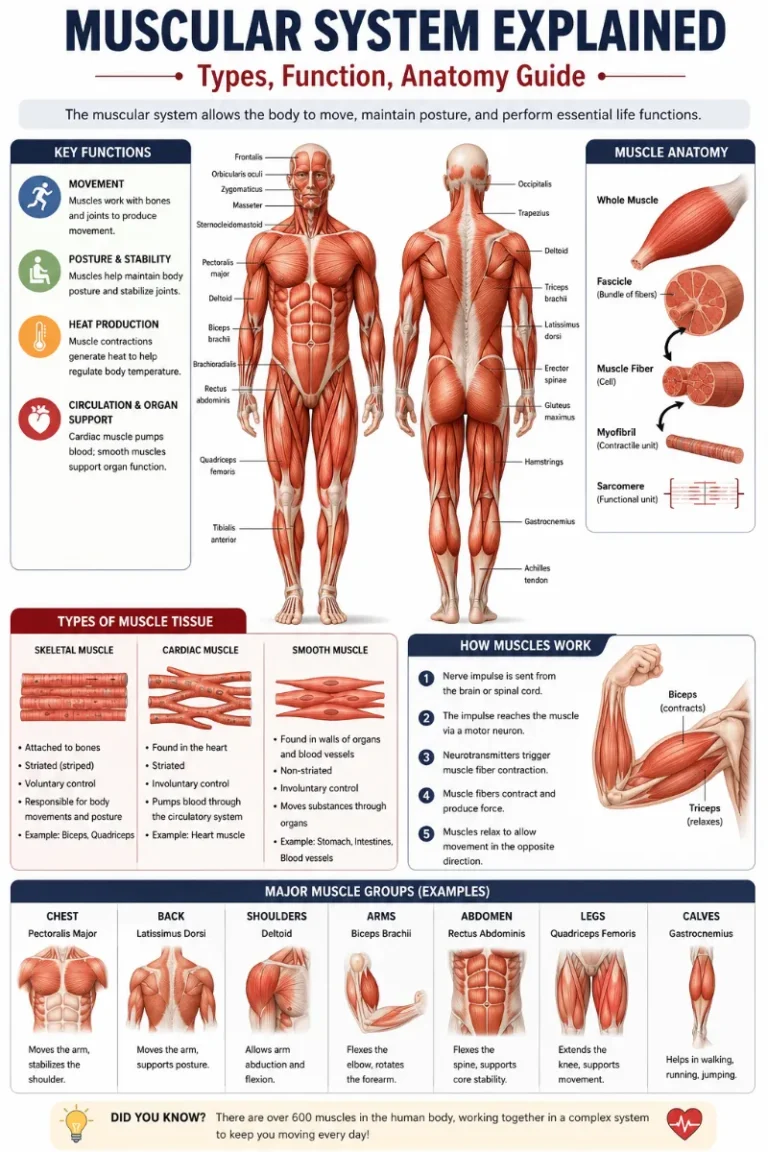
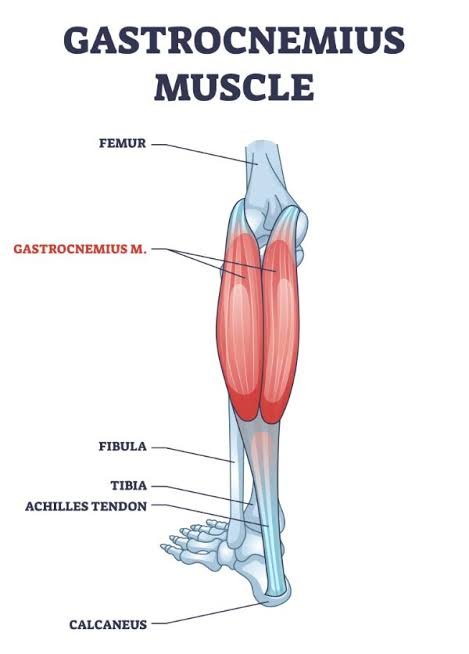
The gastrocnemius is a strong muscle group located on the posterior lower leg. This group consists of two large parts–medial and lateral. The gastrocnemius is contracted while running, walking, jumping, or standing on tiptoe.
It bends the ankle into plantar flexion and flexes the knee, working in conjunction with the soleus muscle to produce movement and form the Achilles tendon that extends to the heel bone.
Origin of the Gastrocnemius Muscle
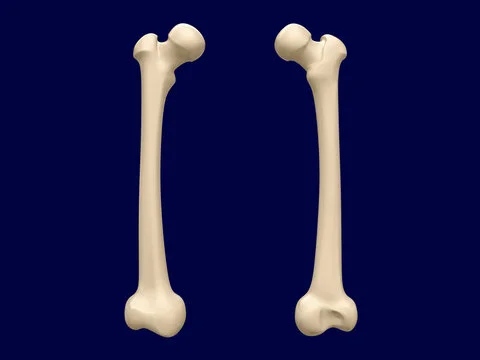
The gastrocnemius muscle originates from two heads of the femur: the medial head and the lateral head.
- Medial head: Originates from the posterior aspect of the medial femoral condyle, including the area just superior to the condyle.
- Lateral head: Originates from the lateral aspect of the lateral femoral condyle, near the lateral supracondylar line.
Both heads also have attachments to the capsule of the knee joint. The tendinous expansions of the medial and lateral heads form aponeurotic coverings over their posterior surfaces. The muscle fibres arise from the anterior surfaces of these aponeuroses.
Insertion
The medial and lateral heads of the gastrocnemius muscle unite to form a single muscular belly near the inferior part of the popliteal fossa. The muscle forms a large portion of the calf, creating the prominent bulge at the back of the lower leg.
The muscular fibres extend down to approximately the middle of the calf, where they gradually transition into a broad aponeurosis. This aponeurosis merges with the soleus muscle tendon to form the calcaneal tendon, commonly known as the Achilles tendon. The calcaneal tendon attaches to the posterior surface of the calcaneus (heel bone).
Blood Supply and Venous Drainage
The gastrocnemius muscle receives its blood supply primarily from the medial and lateral sural arteries, which usually arise from the popliteal artery. The exact origins and branching patterns of these arteries may vary. Additional small arterial branches may arise from nearby genicular arteries.
Venous drainage occurs through the medial and lateral sural veins, which drain into the popliteal vein.
Nerve Supply
The gastrocnemius muscle is innervated by the tibial nerve (S1–S2), which arises from the sciatic nerve. The tibial nerve supplies the muscle in the posterior compartment of the leg and enables plantarflexion of the ankle and assistance with knee flexion.
Relations
The gastrocnemius is a superficial muscle of the posterior compartment of the leg. It has two heads, medial and lateral, and lies superficial to the soleus muscle. The gastrocnemius and soleus together form the triceps surae muscle complex. The plantaris is a separate, small muscle that is present in most people, although it may be absent in some individuals.
The gastrocnemius spans the knee and ankle joints, allowing it to influence movement at both joints. It assists in knee flexion and plays an important role in plantarflexion of the ankle. It also contributes to propulsion during activities such as walking, running, and jumping.
During walking, the gastrocnemius works with other muscles to control ankle movement and help propel the body forward. It also contributes to knee stability during the stance phase of the gait cycle. The quadriceps primarily extend the knee and help control knee flexion during weight-bearing activities, while the gastrocnemius coordinates knee and ankle movements.
The soleus is particularly important for maintaining posture and controlling forward movement of the tibia over the foot during standing and walking. Both the gastrocnemius and soleus contribute to plantarflexion during walking, with their relative contributions varying according to the activity and phase of the gait cycle.
Anatomical Variations of the Gastrocnemius Muscle
The gastrocnemius muscle may exhibit several anatomical variations, including accessory muscle slips, unusual origins, and variations in the number or development of its heads.
The gastrocnemius tertius is a rare accessory muscle or muscular slip described in anatomical literature. An additional soleus muscle, sometimes described as an accessory soleus, is another uncommon variation. These variations may occur without noticeable symptoms, although their clinical significance depends on their size, location, and relationship to nearby neurovascular structures.
In rare cases, an accessory muscle slip may compress the popliteal artery or other structures in the popliteal fossa. Such compression can potentially contribute to vascular symptoms and may require further clinical investigation.
Other anatomical variations may involve a missing or poorly developed gastrocnemius head, along with atypical origins or attachment locations. An abnormal origin of the lateral head has occasionally been associated with compression of the popliteal vessels. Depending on the severity of the compression, this may affect blood flow or venous drainage.
Some unusual muscular variations, including accessory or additional gastrocnemius muscle tissue, have also been documented in anatomical case reports. Their effects on nerve function, movement, and the development of clinical symptoms vary, and the significance of individual variations requires appropriate clinical assessment.
Clinical Significance of the Gastrocnemius Muscle
The gastrocnemius muscle is susceptible to muscle cramps, which are sudden, involuntary contractions that can cause pain and last from a few seconds to several minutes. Cramps may occur after exercise, during physical activity, or at rest.
A medial gastrocnemius strain, commonly known as a calf muscle strain or a “tennis leg” injury, occurs when muscle fibres are overstretched or torn. It often results from sudden acceleration, forceful push-off, or rapid changes in direction, particularly when the ankle is dorsiflexed while the knee is extended.
Overuse can also contribute to calf muscle pain and irritation. The appropriate treatment varies according to the root cause and intensity of the symptoms. Initial management of an acute strain generally involves relative rest, protection of the injured area, and gradual rehabilitation. A physiotherapist may recommend progressive strengthening and stretching when appropriate. Heat, massage, and anti-inflammatory medications may be suitable in selected cases, but their use should depend on the injury and individual circumstances.
Another important clinical condition is popliteal artery entrapment syndrome (PAES). This condition occurs when an abnormal anatomical relationship between the popliteal artery and nearby muscles or tendons, commonly involving the medial head of the gastrocnemius, compresses the artery. It can reduce blood flow to the lower leg, particularly during exercise.
Strain of the Gastrocnemius Muscle
Gastrocnemius strains commonly occur in sports such as tennis, squash, badminton, and running, which involve sudden acceleration, rapid changes in direction, jumping, or forceful push-off.
The injury often occurs when the gastrocnemius muscle is actively contracting while being lengthened, a process known as eccentric loading. A sudden forceful movement can overstretch the muscle fibres and cause a partial or complete tear.
The most common injury site is around the musculotendinous junction, where the muscle fibres transition into tendon tissue. This area is frequently affected in the middle portion of the calf, although the exact location and severity of the injury can vary.
Common symptoms include sudden calf pain, tenderness, swelling, bruising, and difficulty walking or pushing off with the affected leg. Severe strains may significantly limit weight-bearing and require medical assessment.
Exercises of the Gastrocnemius Muscle
The gastrocnemius is one of the major muscles responsible for plantarflexion (pointing the toes) of the ankle. The gastrocnemius also participates in knee flexion. Exercises that stretch and strengthen your gastrocnemius can improve your calf flexibility, ankle strength, and functional mobility.
To stretch the gastrocnemius, keep the knee straight and slowly move your ankle into dorsiflexion (moving the toes toward the shin). Bending the knee reduces the engagement of the gastrocnemius and increases the stretch on the deeper soleus muscle.
Gastrocnemius Muscle Stretching Exercises
1. Seated Towel Calf Stretch
Starting position: Sit on the floor with one leg in front of you and the knee straight.
Procedure:
- Loop a towel or a stretching strap around the ball of the foot.
- Hold the ends of the strap in your hands.
- Gently pull the strap toward your body to bring your toes toward your shin.
- Keep your knee straight and your toes relaxed.
- Hold the position for 20 to 30 seconds, and then release slowly.
- Repeat 2 to 3 times on each leg.
Benefits: This stretching exercise improves calf flexibility and ankle dorsiflexion.
2. Standing Wall Calf Stretch (Gastrocnemius Stretch)
Starting position: Stand facing a wall, and place both hands against the wall for support.
Procedure:
- Step one foot forward so that the other foot is placed behind you.
- Maintain a straight back leg while keeping your heel flat against the floor.
- Point both feet generally forward and bend the front knee.
- Gently lean forward toward the wall until you feel a stretch along the back leg.
- Hold for 20 to 30 seconds, breathing normally.
- Return to the starting position and repeat 2 to 3 times on each side.
Benefits: This stretch targets the gastrocnemius and helps improve calf flexibility and ankle mobility.
Exercises to Strengthen the Gastrocnemius Muscle
1. Single-Leg Weighted Calf Raises
Single-leg weighted calf raises strengthen each calf independently and help to gain ankle strength, muscular endurance, and the ability to push off during walking, running, and other activities.
How to do single-leg weighted calf raises:
- Stand next to a wall or a stable support and hold a dumbbell in one hand.
- Shift your weight onto the working leg and raise the opposite leg slightly off the floor.
- Keep the working knee straight, but not forcefully locked.
- Using the ball of the working foot, push upward and lift the heel as high as possible.
- Pause briefly at the top, and then slowly lower the heel to the floor.
- Repeat 8 to 12 times, and then switch legs.
- Do not use weights if you need help balancing. Only use a step if you can stand on the step comfortably and have control of the movement.
2. Seated Calf Raises
Seated calf raises mainly target the soleus muscle because the knees are bent, but the gastrocnemius still plays a role in plantarflexion of the ankle.
How to do seated calf raises:
- Sit upright on a sturdy chair or bench, with your feet flat on the floor.
- Position your knees at about 90 degrees.
- Place a dumbbell across your lower thighs, just above your knees, and hold it in place.
- Raise your heels by pressing through the balls of your feet, and hold briefly at the top.
- Gently lower your heels to return to the starting position.
- Repeat 10 to 15 times.
- Use your body weight as a start, and build up resistance as you get stronger.
3. Leg Press Calf Raises
Leg press calf raises are a compound exercise that strengthens the calf muscles using a leg press machine. Resistance can be adjusted to gradually increase the demands of the exercise.
How to do leg press calf raises:
- Set the machine to an appropriate and challenging weight.
- Sit in the machine, and position the balls of your feet on the lower part of the footplate, leaving the heels free to move.
- Keep your knees almost straight, without forcing a full lock.
- Push through the balls of your feet to extend your ankles, and raise your heels to their highest point.
- Pause briefly, and slowly lower your heels through a comfortable range of motion.
- Repeat 10 to 15 times, and keep control of the movement.
Always follow the safety instructions provided by the machine manufacturer, and never allow your feet to slip off the footplate.
4. Jump Rope
Jumping rope is a great cardio exercise that also challenges your calf muscles. Repeating the jumping motion builds muscular endurance and power in the calves.
How to do jump rope:
- Choose a length of rope according to your height, and hold one end in each hand.
- Stand facing forward, with your elbows close to your sides.
- Use your wrists to rotate the rope and create a continuous motion.
- Make small jumps with your feet, and allow the rope to pass under your feet with each jump.
- Land on the balls of your feet and use a comfortable pace.
- Start with a short time interval, and take breaks if needed.
Single-leg skipping is a more advanced variation of jumping rope. Build up your skill, muscle endurance, and power before trying this advanced move.
Wall Calf Stretch
- Stand in front of a wall, about an arm’s length away.
- Place your hands against the wall for support.
- Position one foot behind the other, keeping your back knee straight and your heel on the floor.
- Bend the front knee and lean forward until you feel a stretch in the back leg.
- Hold for 20 to 30 seconds
- Repeat 2 to 3 times on each leg.
- Keep the movements gentle and do not force your heel down if it causes pain.
Safety Tips for Gastrocnemius Exercises
- Warm up with a few minutes of walking before doing any strengthening exercises.
- Use an appropriate resistance and increase it gradually as you get stronger.
- Always keep movements slow and controlled, rather than bouncing during calf raises.
- Avoid exercises that cause sharp pain, sudden tension in the calf, or aggravate existing conditions.
- If you have a recent injury to the calf, significant swelling, or difficulty walking, it is best to consult a healthcare professional before doing these exercises.
FAQs
What is the 4 gastrocnemius muscle?
The gastrocnemius and soleus are situated in the leg’s posterior compartment. Because it is situated just beneath the skin and its form is frequently visible through the skin, it is regarded as a superficial muscle.
Plantaris: A small, thin muscle with a very long tendon that runs between the gastrocnemius and soleus.
The deep layer of the lower leg includes the tibialis posterior, flexor digitorum longus, and flexor hallucis longus
What is the best treatment for the gastrocnemius muscle?
Get some rest. Avoid painful activities like walking.
Ice. Swelling may be reduced by applying ice to the damaged region.
A higher altitude.
Either over-the-counter or prescription medications.
Crampers or walking boots…
Heel raises….
Sleeve for compression…
Stretching and strengthening activities.
What exercise helps your gastrocnemius?
The traditional calf-strengthening exercise is the calf raise. Bodyweight exercises help strengthen and tone both the gastrocnemius and soleus muscles. Better still, they don’t need much time and can be done anywhere. To gain equilibrium, stand close to a wall.
What are the symptoms of a weak gastrocnemius?
Reduced propulsion up and forward when walking and running is a sign of weak calf muscles. Prolonged heel contact late in the stance phase of walking or running is the main gait abnormality caused by a weak calf muscle.
How does the gastrocnemius flex the knee?
The gastrocnemius muscle is a knee flexor since it spans the posterior portion of the knee and generates a significant plantar flexion torque over the ankle. The plantaris is a flexor of the knee is the comparatively small plantaris, which also spans the posterior knee.
References:
- Gastrocnemius muscle. (2023b, October 30). Kenhub. https://www.kenhub.com/en/library/anatomy/gastrocnemius-muscle
- Dr. Bhavna Valand. (2024). Gastrocnemius muscle: origin, insertion, function, exercise. SAMARPAN PHYSIOTHERAPY CLINIC AHMEDABAD. https://samarpanphysioclinic.com/gastrocnemius-muscle-origin-insertion-function-exercise/
- McPhillips, K. (1970, January 1). 5 exercises to build Stronger calves. https://www.onepeloton.com/blog/calf-exercises/
- Professional, C. C. M. (2024a, May 1). Calf muscle. Cleveland Clinic. https://my.clevelandclinic.org/health/body/21662-calf-muscle
- CU ORTHOPEDICS – FOOT & ANKLE. (n.d.). Calf stretches. https://medschool.cuanschutz.edu/docs/librariesprovider65/foot-ankle/useful-links/calf-stretches-foot-ankle.pdf?sfvrsn=4a919cba_2